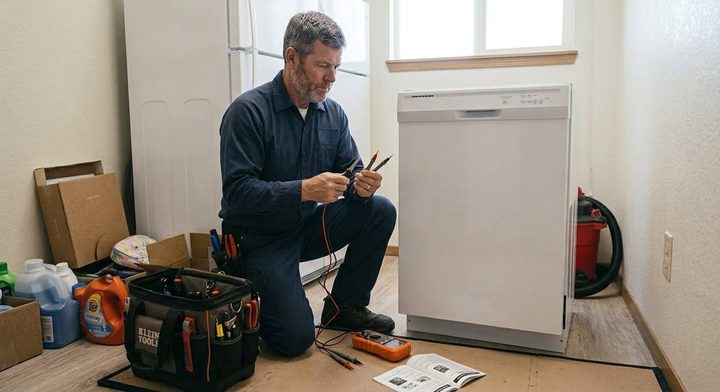
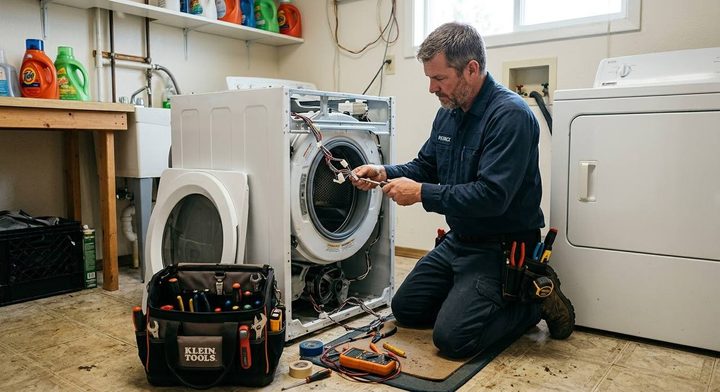
No machine fails more politely — the bin simply stops refilling. Here, no conclusion is drawn until a complete cycle has run under an open panel.

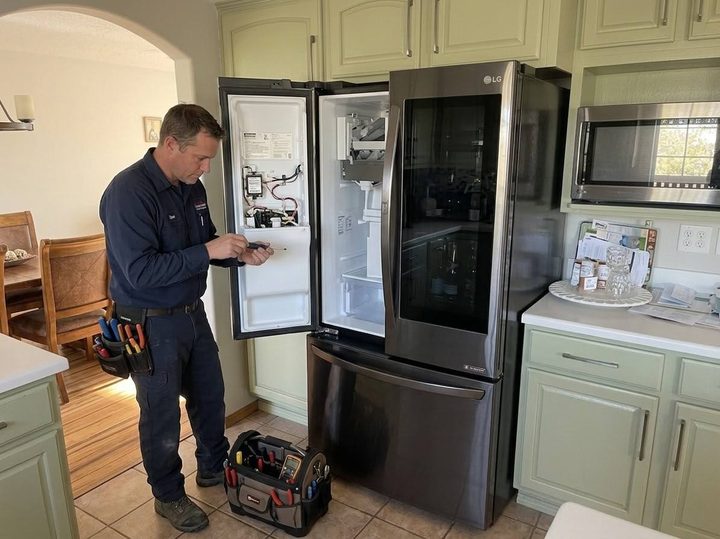
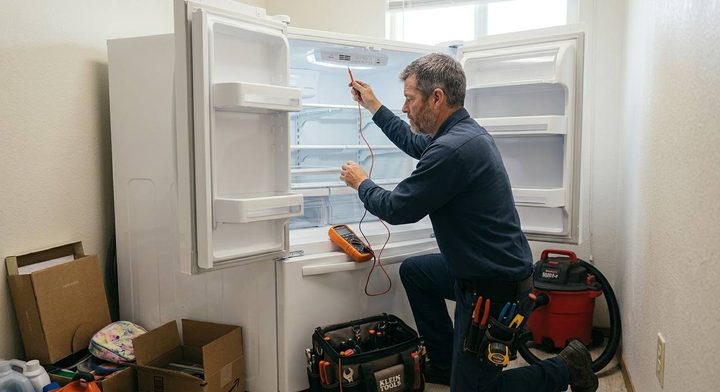
By the time anyone notices an ice maker's silence, the trouble may live at any point between the house's water pressure and the sensor in the bin — and trading parts along that path on a hunch is how sound modules end up on good people's bills. This practice takes the patient road: an entire freeze-and-release sequence watched with the panel off, so the culprit is identified on evidence. That patience is what the service call buys; it costs you nothing extra and spares you everything wrongly bought.
City water keeps most of Bellingham's ice chemistry tidy, which points the usual suspects at valves, fill tubes and filters past their birthday — modest work, honestly priced. The $99 service call covers the visit and the observed cycle; any repair is quoted in writing before it starts, modules and valves itemized for approval — and when the truest advice is a fresh filter and two days' patience, that's exactly what the folder will say.
A marker on the cartridge beats memory. Most 'failing' ice makers we meet are thirsty machines behind a filter that retired quietly a year ago.
Small, hollow or cloudy ice is the machine whispering about water flow before it stops altogether. Whispers are cheaper than silence.
Fill lines run through cold territory in some houses. If ice stops in a cold snap, a frozen line is likely — and forcing the machine while it's blocked helps nobody.
The fault can sit anywhere on a six-link chain, and modules swapped on suspicion are the category's commonest wasted money. One complete freeze-and-release cycle, watched with the panel open, convicts the true link with evidence.
Pressure and the filter's age get checked before any mechanism is doubted — a thirsty machine behind a retired filter is half this category's caseload, cured for the price of a cartridge.
Stale-tasting ice is usually housekeeping and absorption rather than hardware. The honest cure — empty bin, fresh filter, two days' patience — costs almost nothing, and the folder says so when it's the truth.
Fill lines run through cold territory in some houses, and a January silence is often a thaw away from a cure. Forcing a blocked machine helps nothing; the assessment finds the freeze and the reason it happened.
We could, and half the time we'd be billing you for a healthy part — the module is a single link among six. A quarter hour of honest watching identifies the true fault with evidence, and that watching is precisely what the service call pays for.
Most repairs conclude within the visit; the first proper cubes arrive inside a day and a full bin follows shortly. Where a component must travel, its fitting visit adds no labor line to the folder.
Usually housekeeping and a filter rather than hardware — old ice absorbs its surroundings faithfully. Empty the bin, fit a fresh cartridge, give it two days; if the taste persists, the observed cycle finds what's actually contributing.
Ours, happily — they mostly fail through the fan and air path, which is familiar bench work. The occasional boutique unit that only its factory may touch gets identified over the phone at no charge, before any visit enters the book.
The home district — brick streets, hill Victorians, the easiest windows in the book.
Family craftsman homes and the university's hardest-working rental machines.
Lofts, condos and century bungalows — freight elevators and alleys, planned for.
The keep-it-running streets — veterans repaired on principle, garage fridges included.
The young stock — warranty checked free before any fee, cohort patterns named.
The lake road — outage-surge fluent, provisions taken as seriously as kitchens.
Send the symptom through the form, or call (564) 221-8172 and talk it over plainly.