The practice, pictured
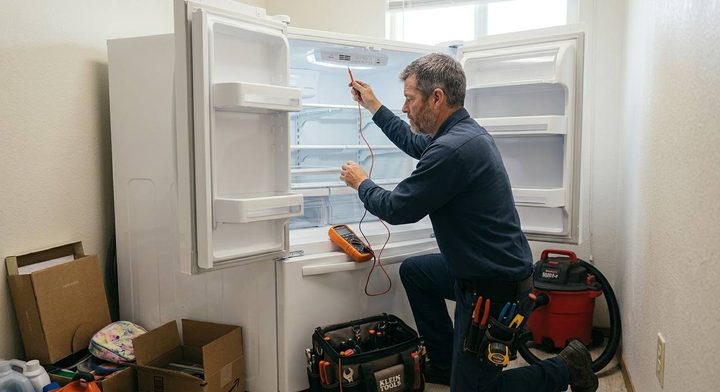
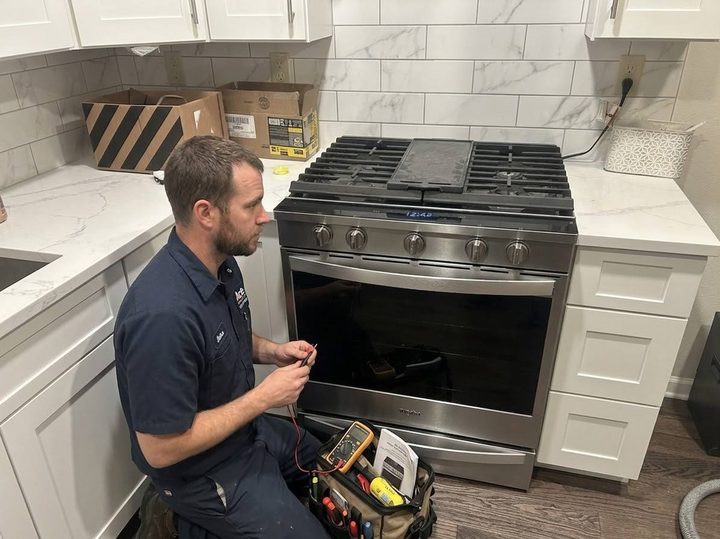
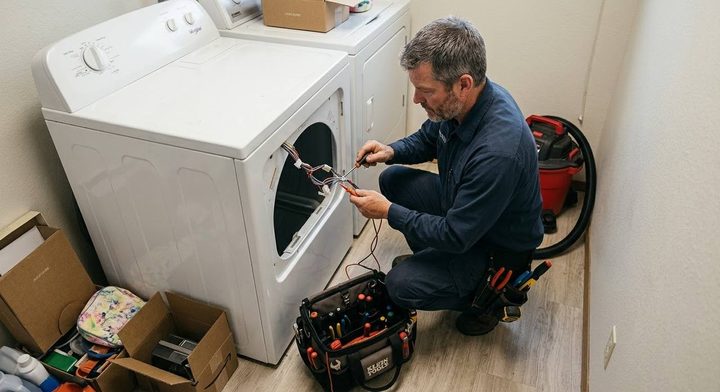
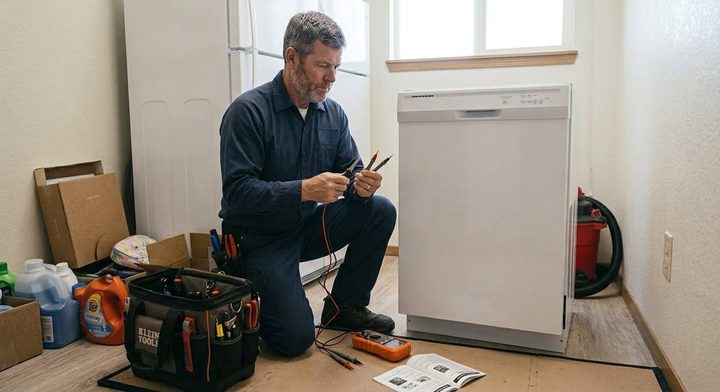
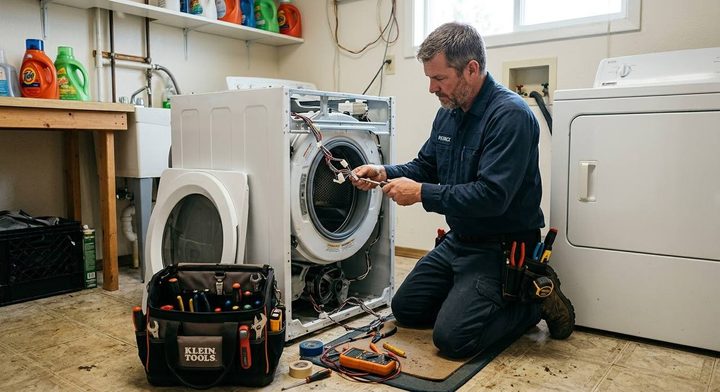
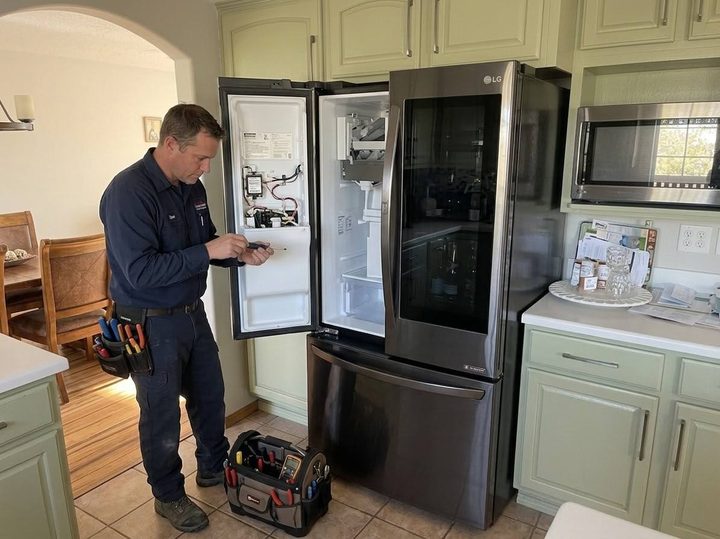
House calls, not stock photography.
One stated price gets a technician to your door with instruments; everything after that goes on paper before it happens. That's the entire pricing philosophy — no menus, no surprises, no arithmetic performed at your kitchen table.
A technician arrives with the instruments the fault deserves, finds it, and names it with evidence. The price of that visit is stated here, once, and never grows: $99, whatever the machine, whatever the neighborhood.
Before a single repair task begins, your machine's exact figure goes into the folder: the labor written plainly, every component itemized at its own price, each line waiting on your approval. A modest fuse and a serious control board have separate stories, and the folder tells both. Once you approve it, the number is frozen — it has never moved after a signature and never will.
The machine runs a complete working cycle before anything is called done, and the warranty on component and workmanship goes into the folder with the findings. Prefer to stop at step one? The $99 settles the whole visit, findings included, persuasion excluded.
Because a symptom is not a diagnosis. The same silent dryer can want a fuse, a switch or a motor — three different jobs wearing one disguise — and a menu that prices the disguise must overcharge the simple cases to survive the hard ones. This practice prices the actual fault, after actually finding it, in writing you hold before deciding.
Roughly a third of jobs wait on an ordered component; the fitting visit adds no fresh labor to the folder, having been allowed for from the first. And when the honest arithmetic says a machine isn't worth its repair, that verdict goes in ink for the price of the service call — with buying advice and no commission behind it.
Never on a Fairhaven folder: travel charges, evening premiums, hourly meters, repeat assessment fees, or hardware nobody approved. Payment happens once, at the end, after the machine has proven itself.
Because a symptom is not a diagnosis, and honest numbers come from found faults, not guessed ones. What is published is the part that never varies — the $99 service call — and the promise that your exact figure goes in writing before any work, where you can weigh it calmly.
The quote is written with the whole visit in view, so you're never billed twice for the same knock on the door. Decline the quote and the $99 is the entire bill; approve it and you pay the written figure you approved — no stacking, no reappearing fees.
The wrenches rest while you hear about it, and the newcomer receives its own figure in ink, yours to take or leave. Whatever you approved for the original fault remains exactly as approved.
Once, at the end, after the machine has performed a complete cycle before your eyes — card, cash or check all welcome. The rare special-order component for a premium model may ask a deposit, announced plainly in the folder beforehand.
One $99 house call answers it in writing. Start with the form or ring (564) 221-8172.